Professional Outdoor Cushion Cleaning
The Homeowner’s Guide to Cleaning Outdoor Cushions the Right Way
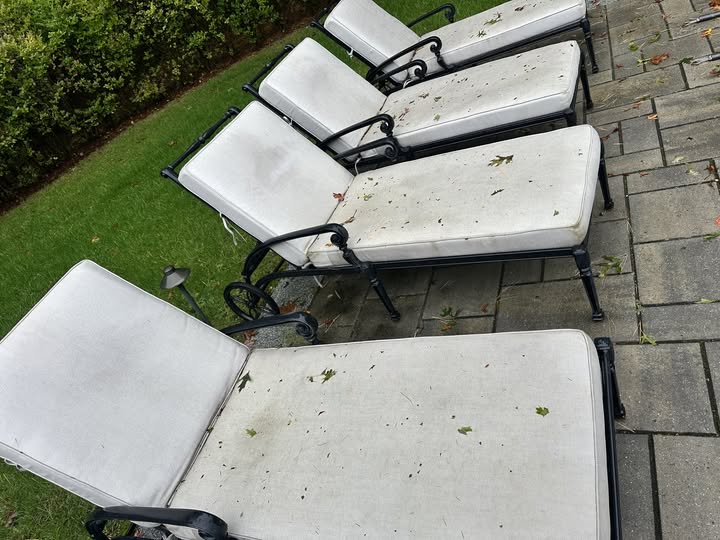
Outdoor furniture has become one of the largest investments many homeowners make for their patios, decks, lanais, and pool areas. Quality outdoor cushions are designed for outdoor use, but they still need regular care if they are going to continue looking their best year after year.
This website was created to help homeowners understand outdoor cushions — why they become dirty, why some stains are difficult to remove, why mold and mildew develop, and how proper cleaning can often restore their appearance while extending their useful life.
Many homeowners believe that once outdoor cushions become stained, faded, or covered with mold or mildew, replacement is their only option. Fortunately, that is often not the case. Professional outdoor cushion cleaning can frequently restore the appearance of quality cushions at a fraction of the cost of replacement.
For more than 56 years I have been professionally cleaning fine fabrics, upholstery, area rugs, and specialty textiles throughout Massachusetts and Cape Cod. During those years I have learned that successful cleaning isn’t about using stronger chemicals or more aggressive methods. It’s about understanding fabrics, understanding stains, and understanding why outdoor cushions become dirty in the first place.
My goal is not only to provide professional outdoor cushion cleaning, but also to create a valuable resource where homeowners can learn how to properly care for their outdoor cushions and avoid common mistakes that can shorten their life.
Professional Outdoor Cushion Cleaning
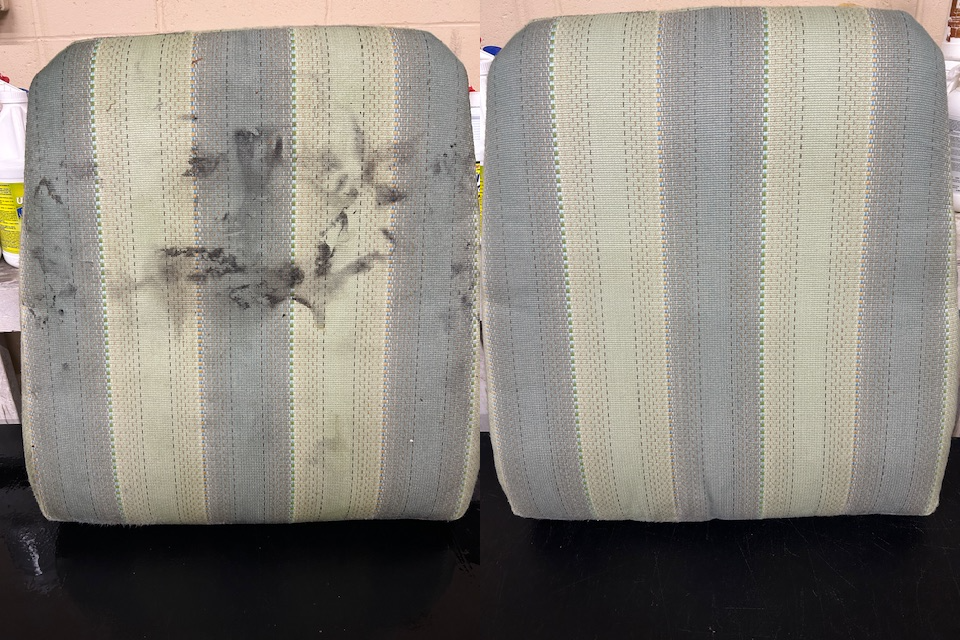
If your outdoor cushions are heavily soiled, stained, affected by mold or mildew, or simply too valuable to risk damaging with aggressive cleaning methods, professional cleaning may be the best option.
I provide specialized outdoor cushion cleaning for homeowners throughout Massachusetts, Greater Boston, the South Shore, and Cape Cod. Cushions are cleaned in a controlled plant environment, thoroughly dried, carefully inspected, and can be wrapped and stored for the winter if desired.
[Learn About Our Professional Outdoor Cushion Cleaning Service]
(You can turn this into a button or link to your main service page or contact page.)
Outdoor Cushions Don’t Become Dirty Overnight
Most homeowners notice the problem only after their outdoor cushions begin looking dirty, develop mold or mildew, or start to smell musty. The truth is, these problems usually develop gradually as outdoor cushions are exposed to the environment day after day and season after season.
During that time, outdoor fabrics collect a surprising variety of contaminants, including:
- Wind-blown pollen
- Dust and airborne soil
- Tree sap
- Bird droppings and berry stains
- Leaves and tannin stains
- Body oils and perspiration
- Sunscreen and tanning lotions
- Food and beverage spills
- Smoke and cooking residue from outdoor grills
- Air pollution
- Morning dew, rain, and humidity
Most homeowners assume mold or mildew is the main problem. In reality, mold and mildew are often only the visible result of months of accumulated organic contamination. When pollen, body oils, food residue, bird droppings, and other organic materials remain on the fabric, moisture from rain, humidity, or sprinklers creates conditions that allow mold and mildew to develop.
That’s one of the reasons professional outdoor cushion cleaning is about much more than improving appearance. It’s about removing the contamination that contributes to many of the problems homeowners experience before those problems become more difficult to correct.
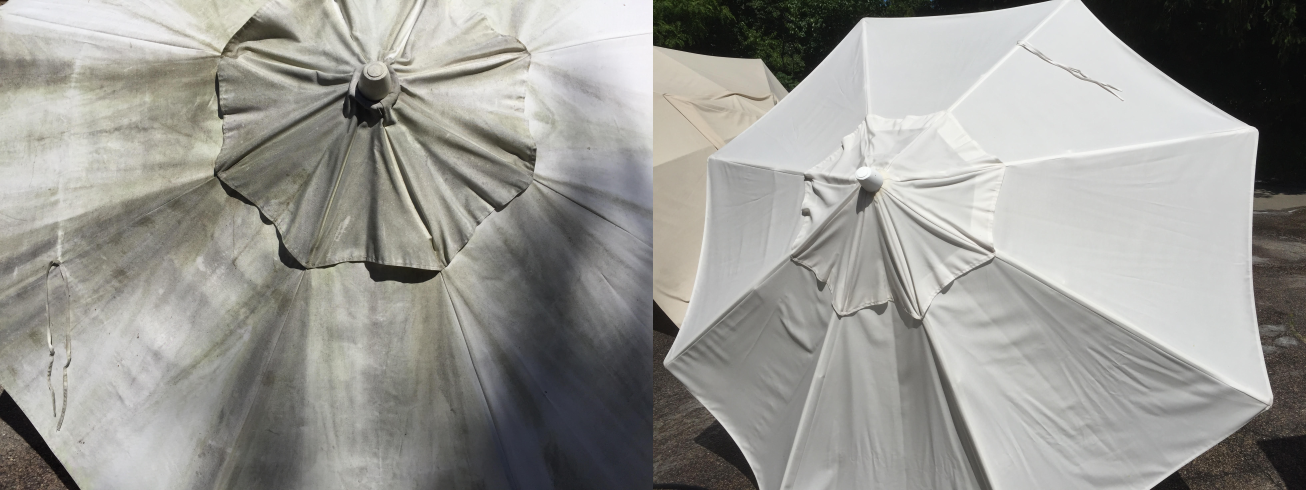
What Most Homeowners Never Think About
Most homeowners notice mold, mildew, stains, or fading because those are the problems they can actually see. What they don’t see is everything that has gradually accumulated on their outdoor cushions long before those problems appeared.
Every time someone sits or lies on an outdoor cushion, small amounts of body oils, perspiration, sunscreen, tanning lotions, and even insect repellents are transferred to the fabric. At the same time, nature is constantly adding its own contaminants — pollen, dust, leaves, sap, bird droppings, and more.
None of these contaminants may seem important by themselves. However, over weeks, months, and years they gradually build up on the fabric. When rain, morning dew, humidity, or sprinkler systems repeatedly wet those residues, they create conditions that allow mold, mildew, algae, stains, and unpleasant odors to develop.
Over the years I’ve found that successful outdoor cushion cleaning isn’t just about removing what you can see. It’s about removing the contamination you can’t always see before it shortens the life of the fabric.
Why Sunbrella® Fabrics Are Different
Many people own Sunbrella cushions but aren’t really sure what makes them different from ordinary outdoor fabrics.
One of the reasons Sunbrella has earned such an outstanding reputation is that it uses solution-dyed acrylic fibers. I often explain it this way:
Imagine cutting a radish in half. The red color is mostly on the outside while the center is white. Many traditionally dyed fibers are similar — much of the color is concentrated near the surface of the fiber.
Now imagine cutting a carrot in half. It’s orange all the way through. That’s very similar to the way solution-dyed acrylic fibers are made. The color is incorporated throughout the fiber during manufacturing rather than being applied only to the surface afterward. The result is exceptional resistance to fading from sunlight.
However, fade resistance does not mean maintenance-free. Pollen, body oils, bird droppings, tree sap, sunscreen, food spills, mold, mildew, and other contaminants can still accumulate on the fabric and should be removed periodically through proper cleaning.
Is Pressure Washing a Good Idea?
One of the most common recommendations you’ll find online is to clean outdoor cushions with a pressure washer. Personally, I believe homeowners should think carefully before doing so.
If you’ve ever used a pressure washer on a wooden deck, you’ve probably noticed how easily it can remove weathered wood fibers or leave visible streaks when the spray is held too close or moved too slowly. Outdoor fabrics are considerably more delicate.
Maintaining exactly the same distance from the fabric while moving across the surface is nearly impossible. As a result, some areas receive much more force than others, creating uneven cleaning and unnecessary friction. In my experience, repeated high-pressure cleaning can contribute to premature wear of the fabric and place additional stress on the stitching that holds the cushion together.
The objective of professional cleaning isn’t to use the greatest amount of pressure possible. The objective is to safely remove soil while preserving the fabric, seams, and overall construction of the cushion for years to come.
Why This Website Is Different
This website is different from many others you’ll find online. It wasn’t created simply to advertise a cleaning service. It was created to share over five decades of hands-on experience caring for outdoor fabrics.
Over the coming months I’ll continue adding detailed articles covering topics such as:
- Should I clean my outdoor cushions myself?
- Can moldy outdoor cushions really be saved?
- Why do outdoor cushions smell after rain?
- How often should outdoor cushions be professionally cleaned?
- Can patio umbrellas be professionally cleaned?
- Why are my outdoor cushions turning pink?
- How to clean Sunbrella cushions
- Should you pressure wash outdoor cushions?
My hope is that CleaningOutdoorCushions.com becomes a trusted resource where homeowners can find honest answers based on real-world experience rather than guesswork.
Ready to Talk About Your Outdoor Cushions?
If your outdoor cushions are heavily soiled, stained, affected by mold or mildew, or simply need professional care, I would be happy to help.
I provide specialized outdoor cushion cleaning for homeowners throughout Massachusetts, Greater Boston, the South Shore, and Cape Cod.
Primary Phone: 781-871-1415
Alternate Phone: 781-871-4428
Email: Alec@Alecscarpetcleaning.com
Thank you for visiting. I hope you’ll return often as new articles and cleaning tips are added.
—